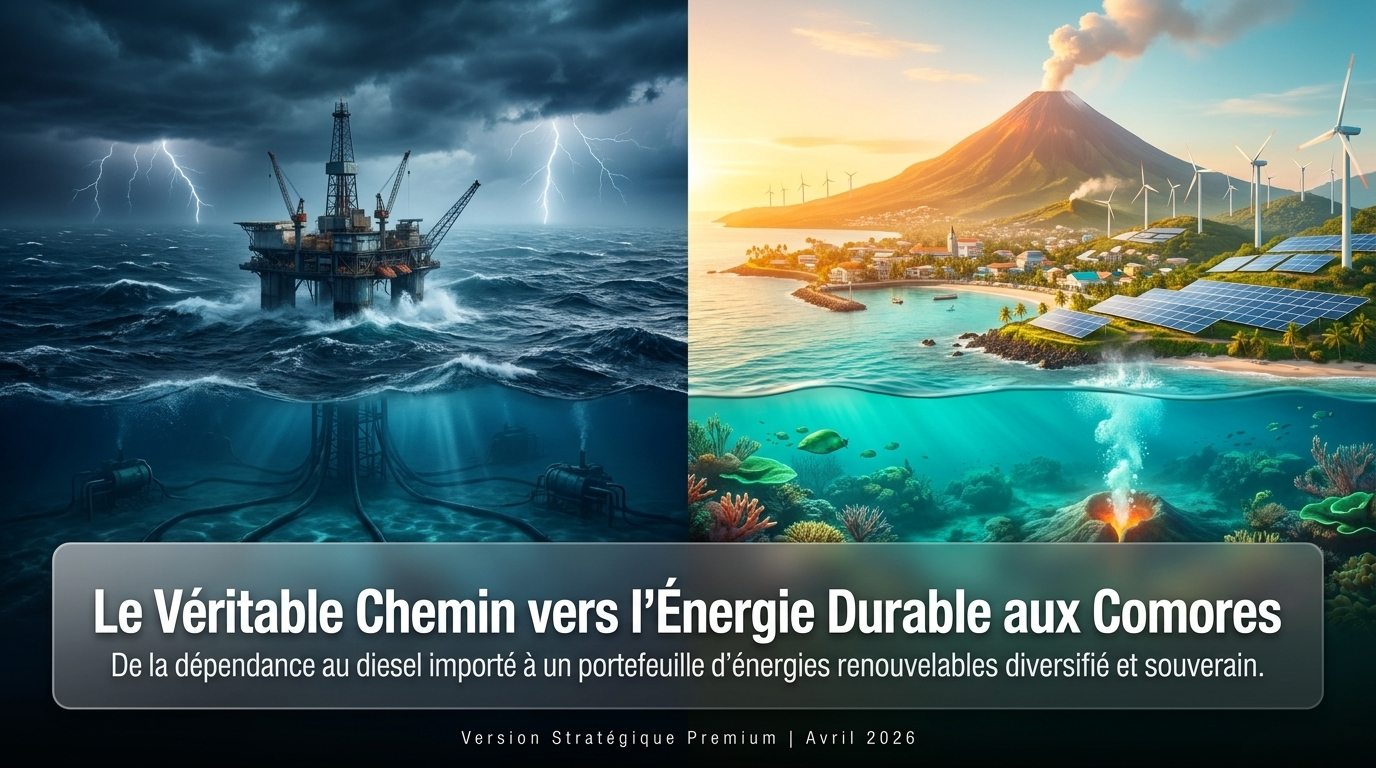
At the June and July 2026 meetings in the Comoros, energy came up in every conversation. The figures of the National Energy Compact (Mission 300) say why: 91% of electricity comes from imported diesel. Of about 53 MW installed, only 22 MW were available in 2024, against peak demand of 26.2 MW. Producing a kWh costs USD 0.76; the average tariff is USD 0.43. The gap, about USD 22 million a year in subsidies, weighs on the whole country.
The temptation to do everything at once
Faced with the emergency, one would like to put solar panels everywhere, drill Karthala and wait for oil. The plan Ranza presented proposes the opposite: a strict order.
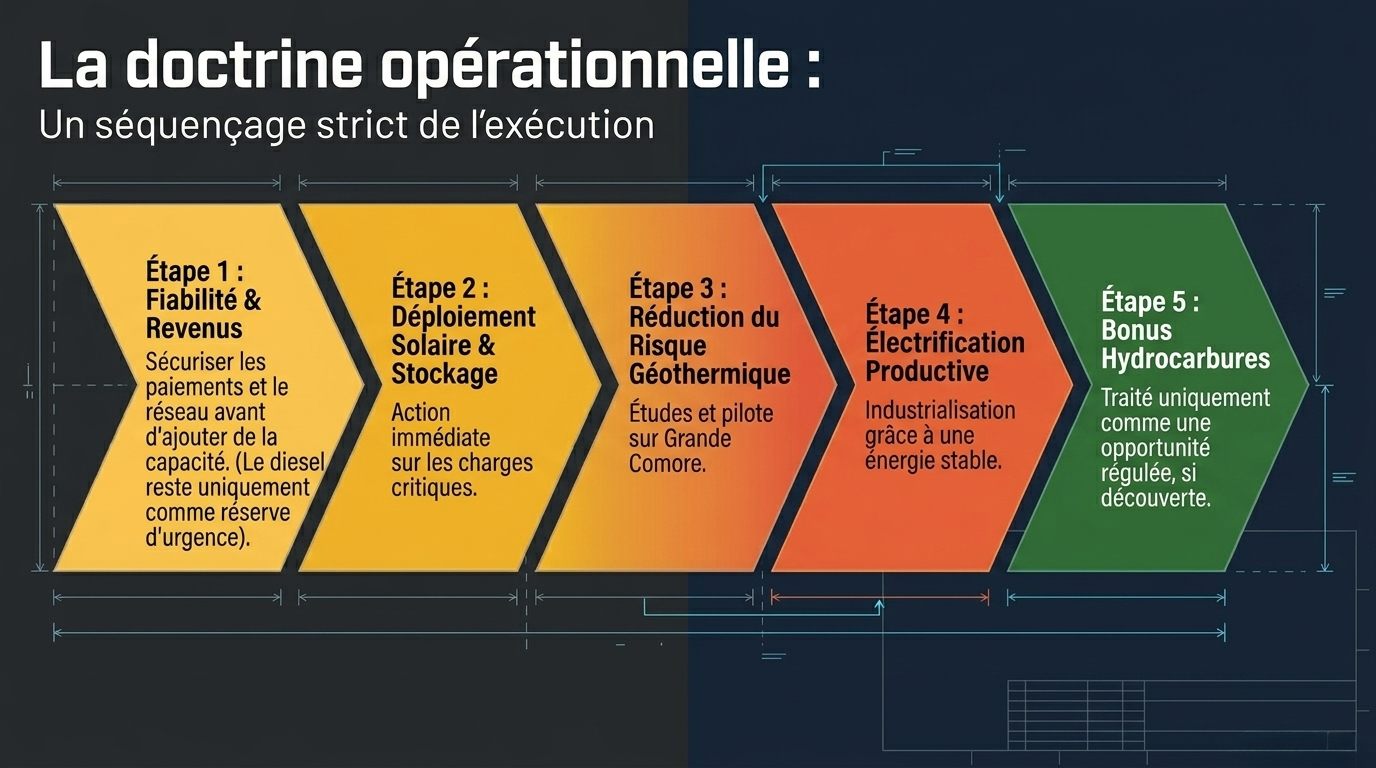
- Reliability and revenue: meters, bill collection, outage mapping. Without revenue or a reliable grid, no investment lasts. Diesel stays as an emergency reserve.
- Solar and storage on critical sites: hospitals, schools, water pumping.
- Reduce the geothermal risk: studies and a pilot on Grande Comore, gate by gate.
- Productive electrification: workshops, cold storage, local processing.
- Oil, only as a regulated bonus.
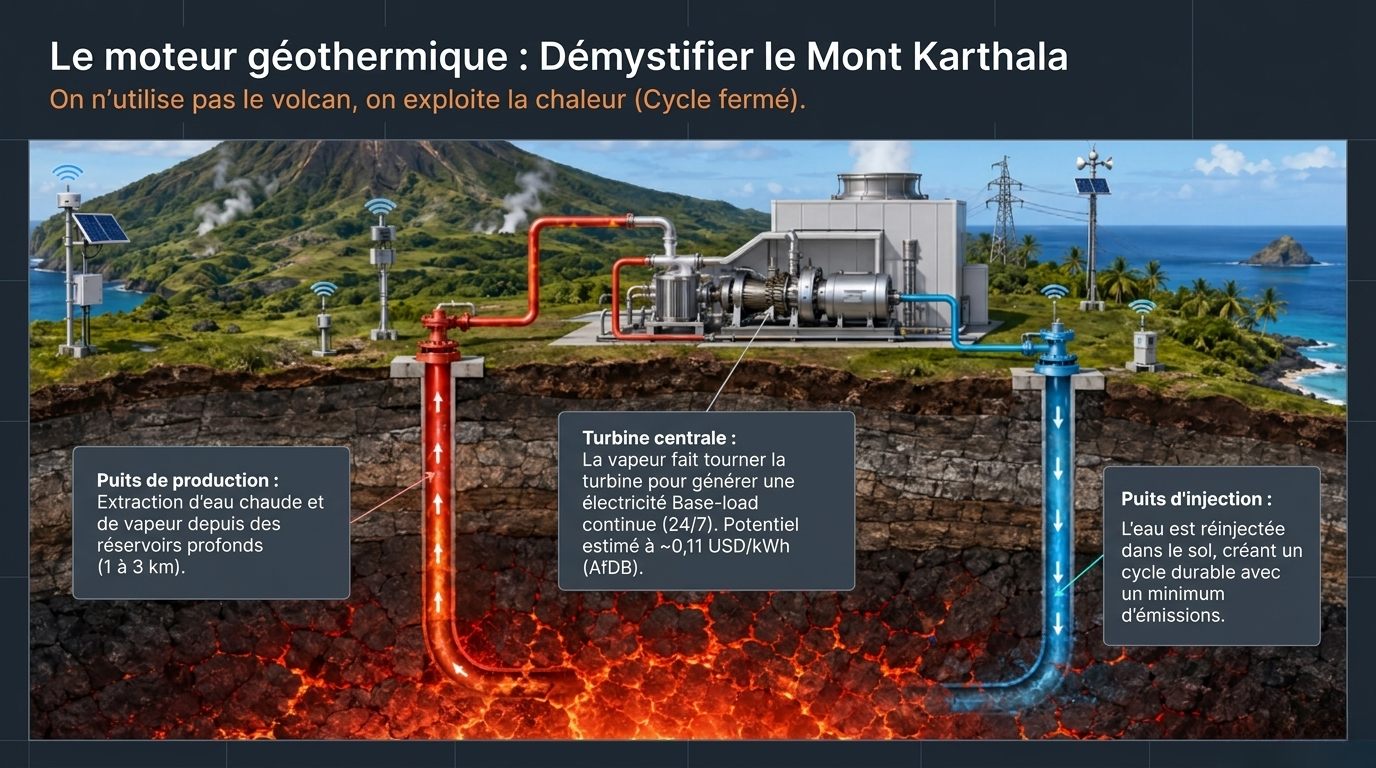
Other volcanic lands show the way. In Iceland, geothermal energy heats about nine homes in ten and produces a large share of the electricity; in Kenya, the Rift Valley made it one of the country’s main sources of power. In both cases, years of studies and exploration drilling came before the power plants.
Oil: a hope to be governed
In Seleani, Mr Ziddini Abdoussalam presented the geology and oil potential of the Comoros. IREX cites seismic estimates of several billion barrels in blocks 35, 36 and 37. These are estimates: only drilling can confirm them. Hence the plan’s rule: no spending in advance on unconfirmed revenue; and if it ever comes, it goes first to debt, to the grid, then to education and the savings of future generations.
Jobs at every step
Each step creates work: solar installation and maintenance, meter fitting, data and dashboards, local processing. The National Compact aims for 1,000 direct and indirect jobs by 2030.