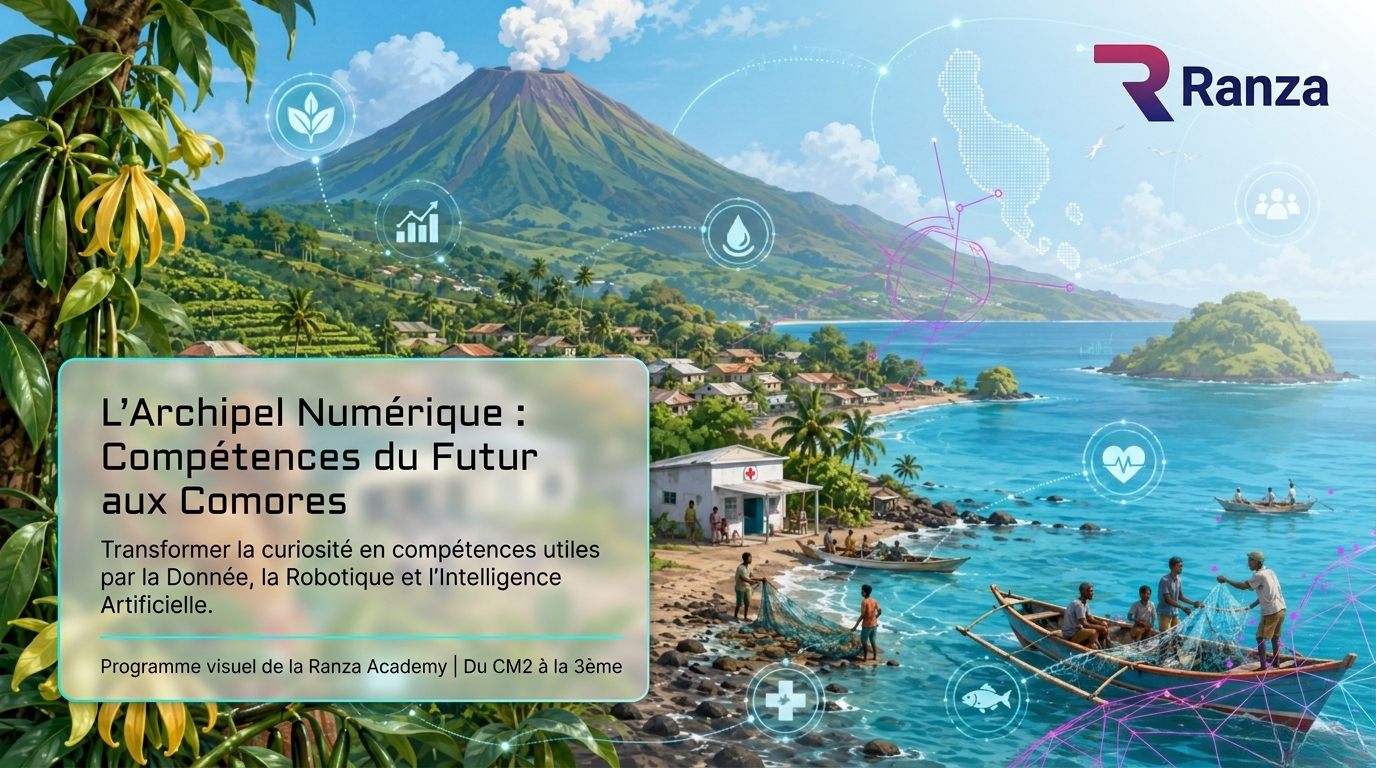
Among the presentations of June and July 2026 in the Comoros, one programme spoke especially to parents and teachers: “The digital archipelago: future skills in the Comoros”. Its aim: turn children’s curiosity, from CM2 to 3ème (ages 10 to 15), into useful skills through data, robotics and artificial intelligence.
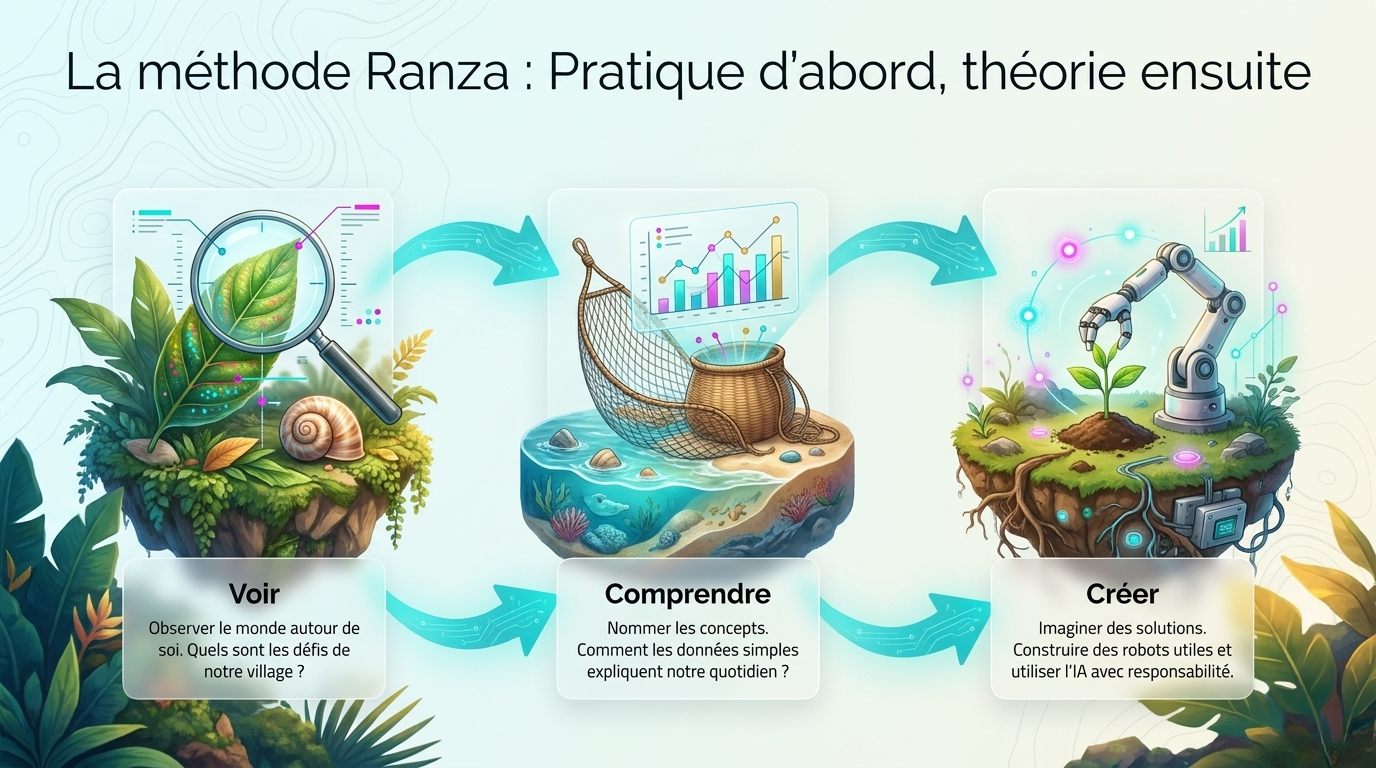
Practice first, theory after
Everything starts from what children see around them. See: what are my village’s challenges? Understand: name the concepts, read a simple chart. Create: imagine a solution, build a useful robot, use AI responsibly. The path has eight steps: data (observe, collect, make tables), robotics (understand sensors, imagine a robot useful to the Comoros), AI (how it learns, what it is for in our sectors), ethics, then a final project presented to parents.
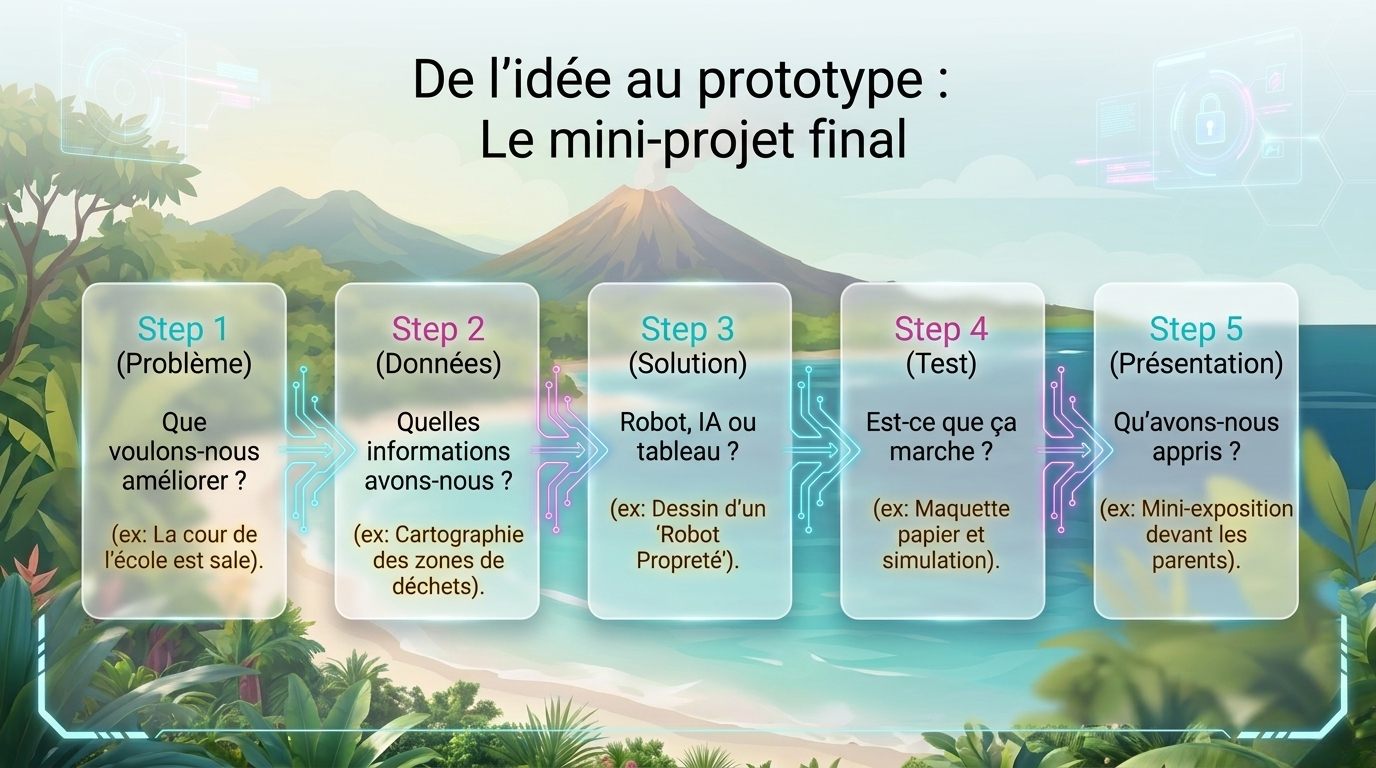
Examples from here
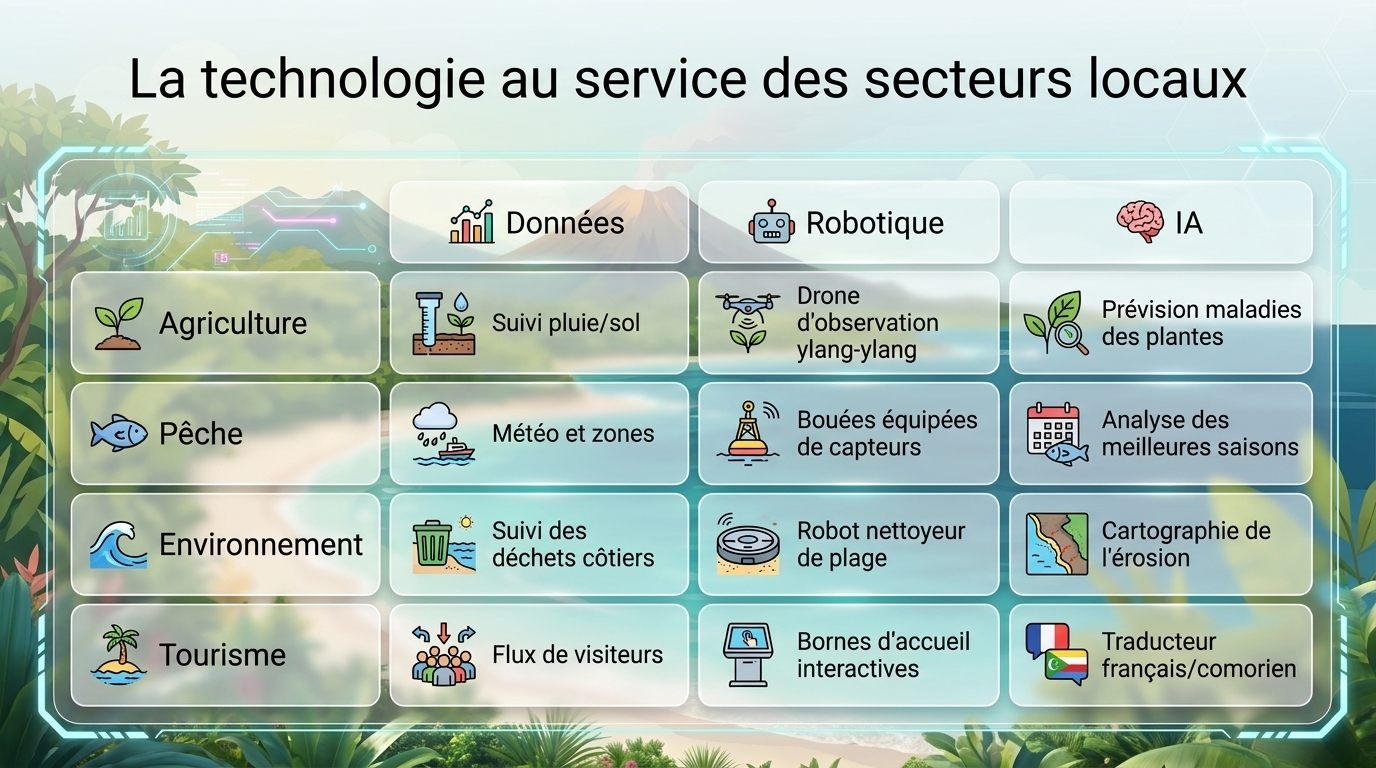
Tracking rainfall for farming and ylang-ylang; marine weather combined with fishermen’s observations to decide on a trip at sea; a beach-cleaning robot; a French–Comorian translator. One rule stays at the centre: technology helps us think, it does not replace the experience of our elders.
Four golden rules
Check (AI can be wrong), protect (never personal data), respect (no insults or harassment), understand (never copy an answer without analysing it). At home the goal is the same: that the child becomes a creator, not a consumer of screens.