At our June and July 2026 meetings in the Comoros, the guide “Culture, Faith and Finance” raised many questions. The Anda, the Grand Marriage, is not just a celebration: it is an institution that brings social recognition, honour to the extended family and a redistribution of wealth within the village. The intention is noble. The question is not whether to hold it, but how it is financed.
Where the trap closes
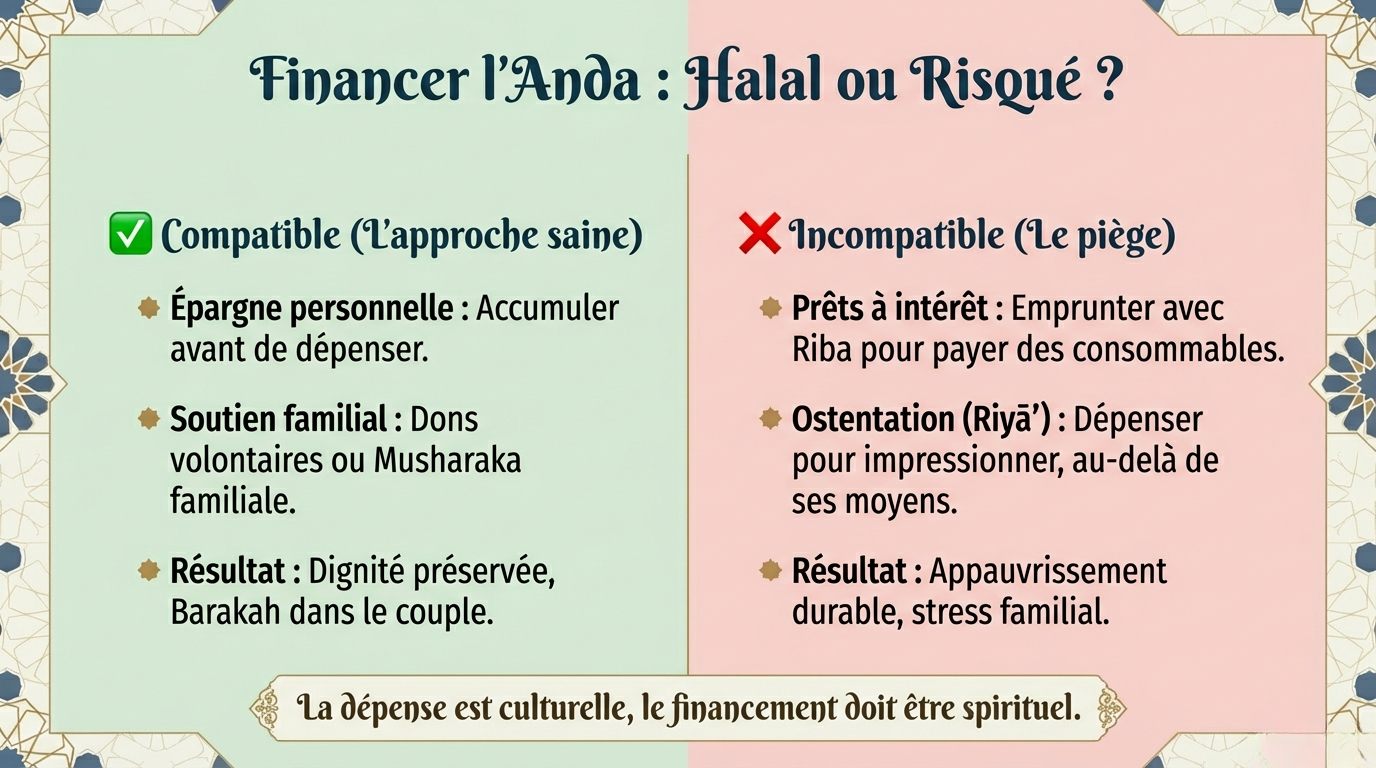
Under social pressure, many families borrow. “Meck” — quick cash against a fixed, increased repayment — is the most common example. Yet any surcharge agreed in advance on a cash loan is riba, whatever the rate. Add to that spending for show, beyond one’s means, and a Machuhuli sometimes imposed through public shame, with no transparency on how the funds are used.
The alternatives exist
| Need | Alternative |
|---|---|
| Preparing the Anda | Saving early and safely (wadiah) |
| Sharing the effort | Shared family contributions, which are not debts |
| An urgent need | Qard Hasan: an interest-free loan, repaid at the exact amount |
| Materials, equipment | Islamic microfinance: a sale at a fixed, known margin (murabaha) |
| A lasting Machuhuli | A clear register and a share invested as waqf for future weddings |
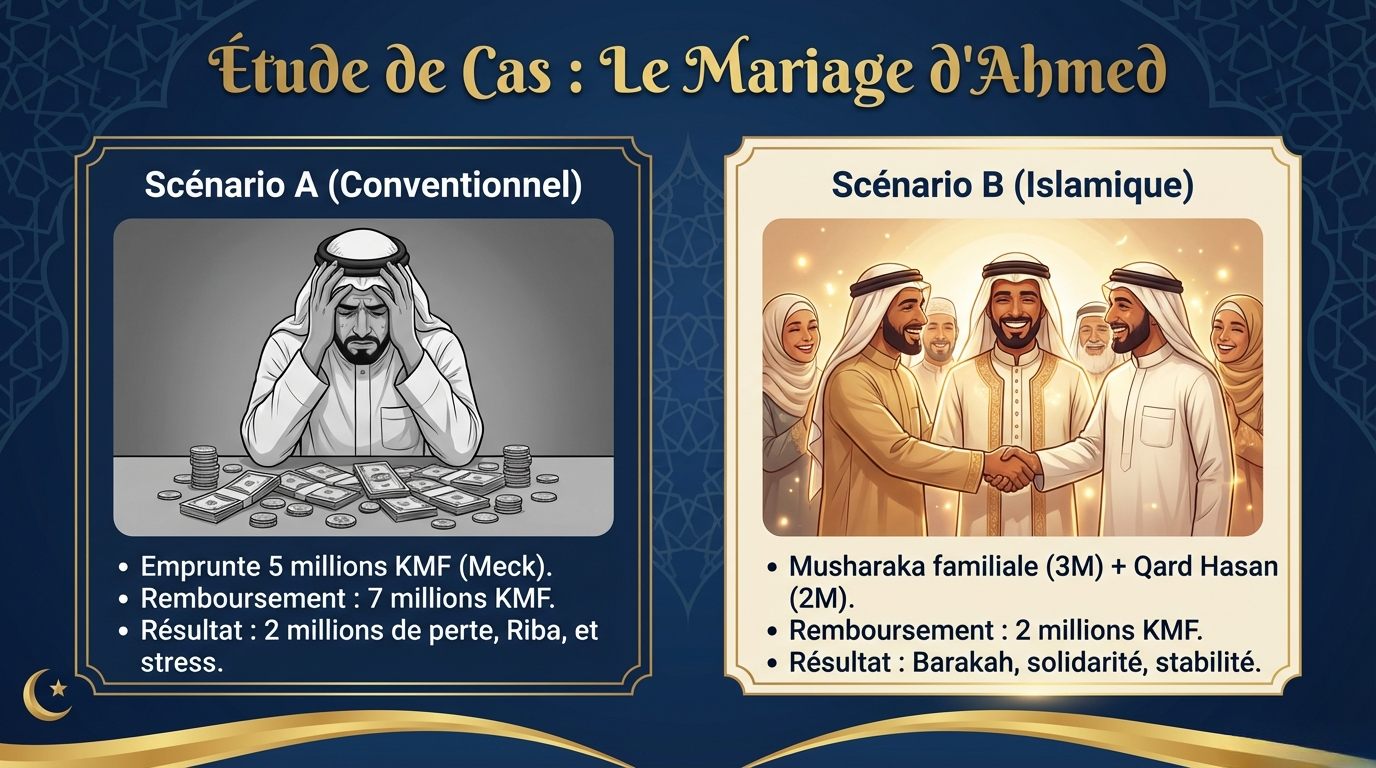
Ahmed’s case says it all. Borrowing 5 million KMF through “Meck”, he repays 7 million: 2 million lost, and years of stress. With 3 million in family contributions and 2 million as Qard Hasan, he repays only 2 million. The same celebration, without interest-bearing debt.
The module “Ethical Comorian finance: Anda, Machuhuli and Meck” in the course Islamic Finance Practice covers these points, with exercises: https://ranzaacademy.com/en/formations